
The much more valuable part is breaking these high-level scores down into specific and prioritized metrics at each level within each functional area of the organization.
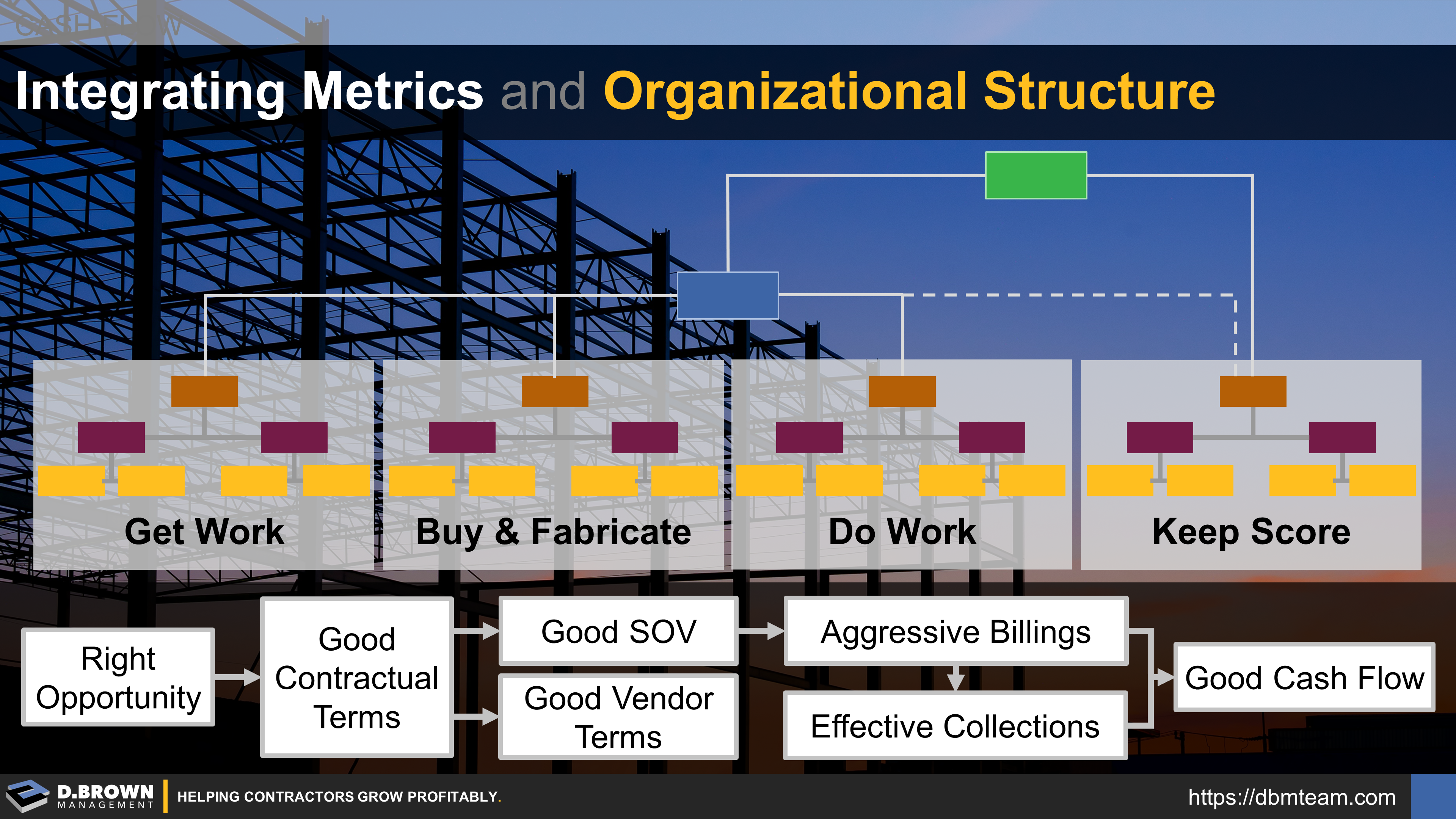
At the highest level, all contractors should be looking at the same scoreboard. Depending on their business dynamics and organizational structure at the time, the metrics they prioritize at each level will change.
The book, 4 Disciplines of Execution (4DX) summarizes these concepts very well.
For example, when looking at a metric like cash flow, you must ask a few questions:
- Do we even have the information to measure this outcome at the high level like the scoreboard?
- What has our trend been on this metric and what do we want to improve it to over the next 12 months?
- Going down one level in the organization and looking across all involved functional areas: What are the one or two key things we can do that will have the biggest impact on improving the outcome? Preferably, these are specific, relatively frequent, and measurable, allowing for PDCA.
- Repeat for each level in the organization until you have substantially connected a high-level output metric through all relevant levels and functional areas.
Think about this simple structure for cash flow and what a similar structure would look like for profitability, customer satisfaction, or safety.
