
What is critically difficult is striking that balance between helping and helping too much. There is probably no better illustration than this short video of a mother duck training her ducklings to climb stairs:
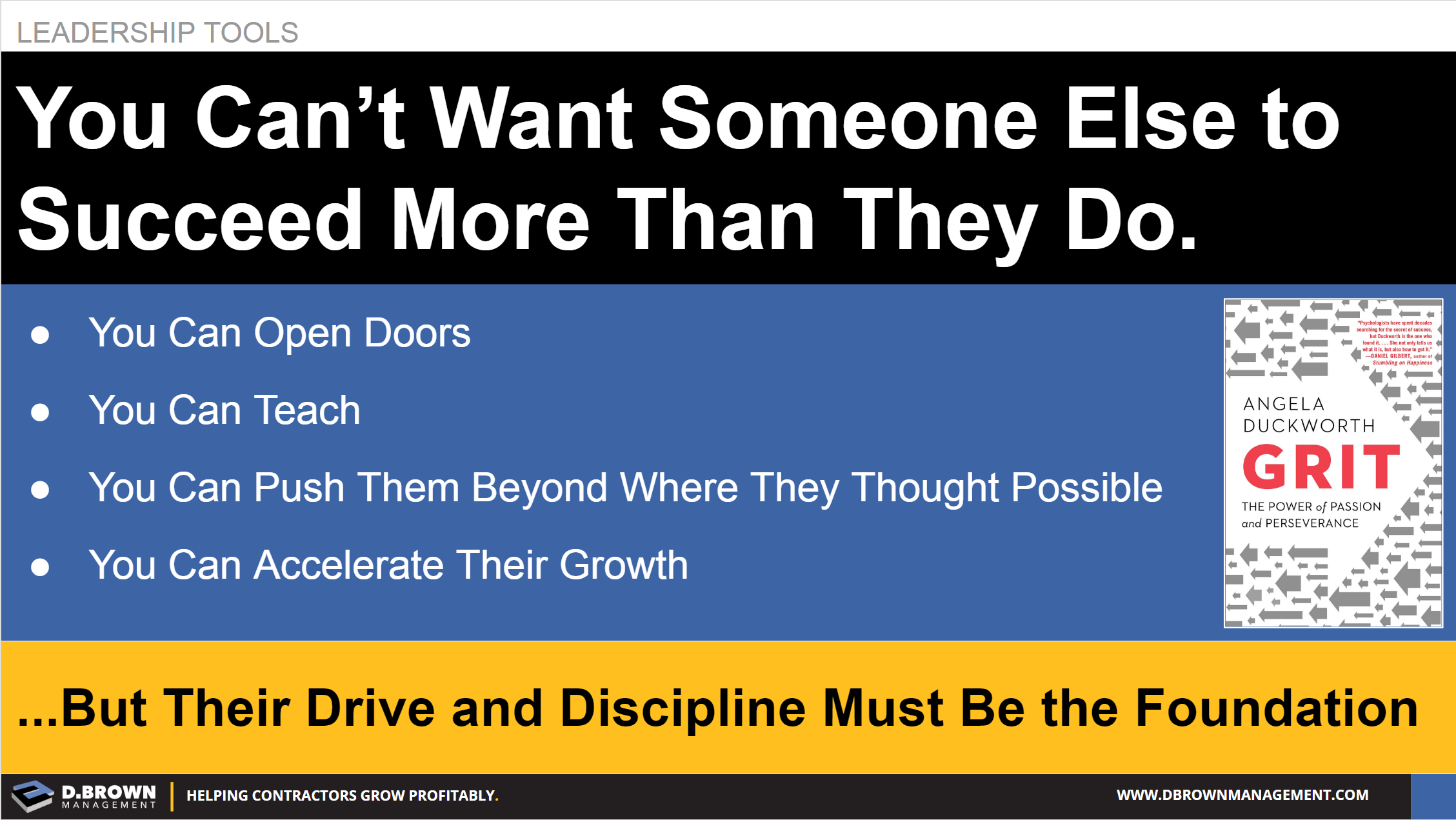
Leaders can do a lot but they can’t want success for team members more than they want it themselves. Angela Duckworth does a great job of explaining this internal drive (GRIT) and how it has one of the highest correlations to success over any other behavior.
What leaders can do is help build grit; in themselves and their team members. Everyone on the team can help each other.
- Wake up everyday and push yourself to learn or do something new.
- When you fail get back up with a smile on your face and go again until you succeed!
- Stretch others by stretching them a little each day; each interaction just beyond where they have gone before then celebrate the wins. Over time that will build grit and a habit of discipline.
- Talk openly about what can be achieved in life with the daily discipline of execution and stretching.
When working with contractors we work hard to strike a balance between:
- Fishing (SUPPORT)
- Teaching people how to fish (GROWTH)
- Teaching people to teach others how to fish (SUSTAINABLE GROWTH)
