A Typical Project - Understanding the Basics of Cash Flow

It is extremely important to understand the costs, billings, cash-in, and overhead.

D. Brown Management Profile Picture
Share
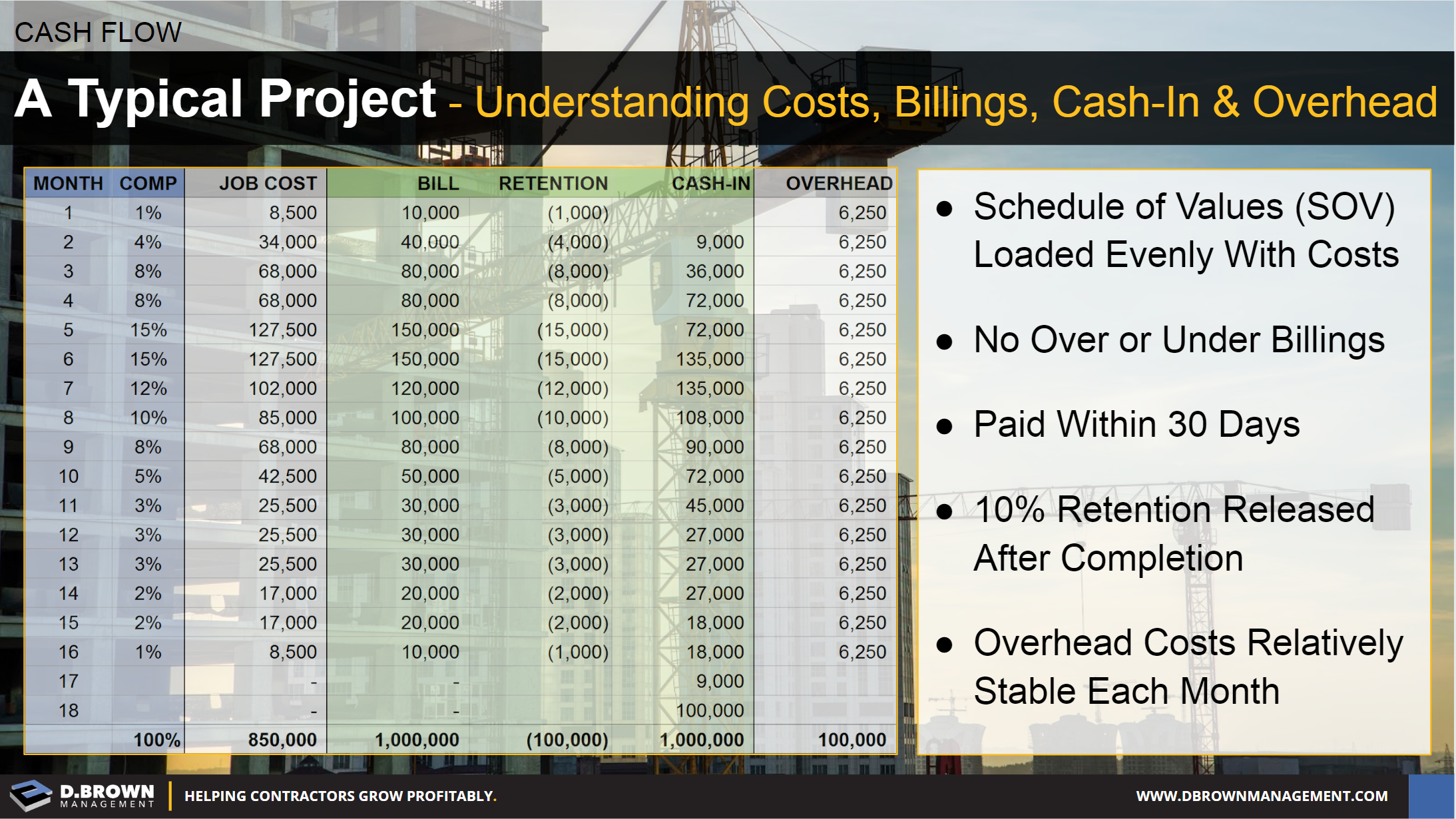
Cash Flow: A Typical Project. Understanding Costs, Billings, Cash-In and Overhead.

Previously we looked at a typical construction project’s profitability basics and then covered a brief description of cash flow.  Now let’s get into the basics of how that looks over the course of the project.  

  • In our example the project is 16 months in duration.  
  • The completion of the project during each month is an average of several real projects.  This will vary significantly based on each project and it is important to understand those variances.  
  • Costs per month are shown to be paid during that period.  This also varies significantly based on the project type. For instance labor is paid immediately each week where most subcontractors are “Pay-When-Paid” including retention.  This is why a labor-intensive specialty contractor must have higher profit margins than a general contractor that does not self-perform.  
  • Bills are paid in the month following.  For many contractors this is closer to 2 months on average which changes the cash flow dynamics significantly.  
  • Retention of 10% is held out of each billing.  It is billed for after completion of the project then paid a month after that.  Again this is very generous as compared to how it works most of the time.  
  • Billings match earned revenue perfectly.  There are no “Under Billings” or “Over Billings” shown in the model just for simplicity.  
  • Overhead costs are spread evenly across the whole project duration.  There are many ways to look at this but in general overhead costs don’t vary much each month.  

In future posts we will use this data table to show what cash flow looks like then go through strategies and tactics to improve cash flow.


A Typical Project - Understanding the Basics of Cash Flow
Great cash flow is a key driver of valuation and successful successions. Running out of cash is is the #1 reason contractors fail. Improving cash flow improves your Return on Equity. Protect yourself and never let cash flow be the limitation to your profitable growth....

A Typical Project - Understanding the Basics of Cash Flow
Great cash flow is a key driver of valuation and successful successions. Running out of cash is is the #1 reason contractors fail. Improving cash flow improves your Return on Equity. Protect yourself and never let cash flow be the limitation to your profitable growth....

Project Delivery - Design-Bid-Build
The Design-Bid-Build (DBB) method of project delivery is easily the most familiar to owners, architects, and contractors. No contractor should ever lose their ability to compete, win, and build profitable projects using this method of delivery.
My Talent Promise - To Everyone
Talent is the biggest constraint that most contractors will face over the next decade. Every manager needs to get exceptionally clear on the promises they will make to those around them.
Building a Systems Development Team - Workflow
How Workflow Mapping can be an important tool for Systems Development Teams and beyond.